
Last Updated: November 5, 2026
Quick Summary
Gel nail polish is a pigmented coating that stays liquid until exposed to UV or LED light, which hardens it into a durable film. Unlike regular lacquer, which dries by evaporation, gel cures through a chemical reaction, so it resists chips and smudges far longer.
- Prep the nail by pushing back cuticles, buffing the surface and wiping with a dehydrator or alcohol.
- Apply two thin coats rather than one thick coat, curing each layer under the lamp.
- Cure each layer for the time the manufacturer specifies, typically around 30 to 60 seconds under LED.
- Remove gel by soaking in acetone for 10 to 15 minutes instead of peeling it off.
- Match your curing lamp to the wavelength and wattage the gel formula is designed for.
Table of Contents
- How Gel Nail Polish Works and Where It Fits
- Gel Polish Application: Prep, Thin Coats and Cure
- Choosing a Curing Lamp for Your Gel Polish
- Gel Polish Removal Without Damaging Your Nails
- Gel Polish vs Regular Nail Polish: Which Suits Your Clients
- Classique's Gel Polish Picks Compared
- Start Your Next Gel Set With Classique
- Frequently Asked Questions
Gel nail polish has become a staple in Canadian salons and home kits alike, and for good reason: a well-applied gel manicure can last weeks without chipping. This guide walks through how gel works, how to apply and cure it, how to remove it safely, and how to choose between gel and regular polish for your clients. Whether you run a salon or do your own nails at home, the practical details below will help you get a longer-lasting, healthier result.
How Gel Nail Polish Works and Where It Fits
Gel nail polish is a pigmented coating that stays liquid until it is exposed to ultraviolet or LED light, which hardens it into a durable film. Unlike regular lacquer, which dries through evaporation, gel cures through a chemical reaction. That is why it resists chips and smudges far longer than standard polish.
Gel fits best where durability matters most: a client who wants a manicure to last two to three weeks, a technician working on detailed nail art, or a home user who wants a salon-style finish without a salon visit.
Gel Polish Application: Prep, Thin Coats and Cure
Good application starts before the colour touches the nail. Gently push back the cuticles, lightly buff the nail surface to remove shine, and wipe the plate with a dehydrator or alcohol so the base coat can bond properly. Skipping this step is the most common reason gel lifts early.
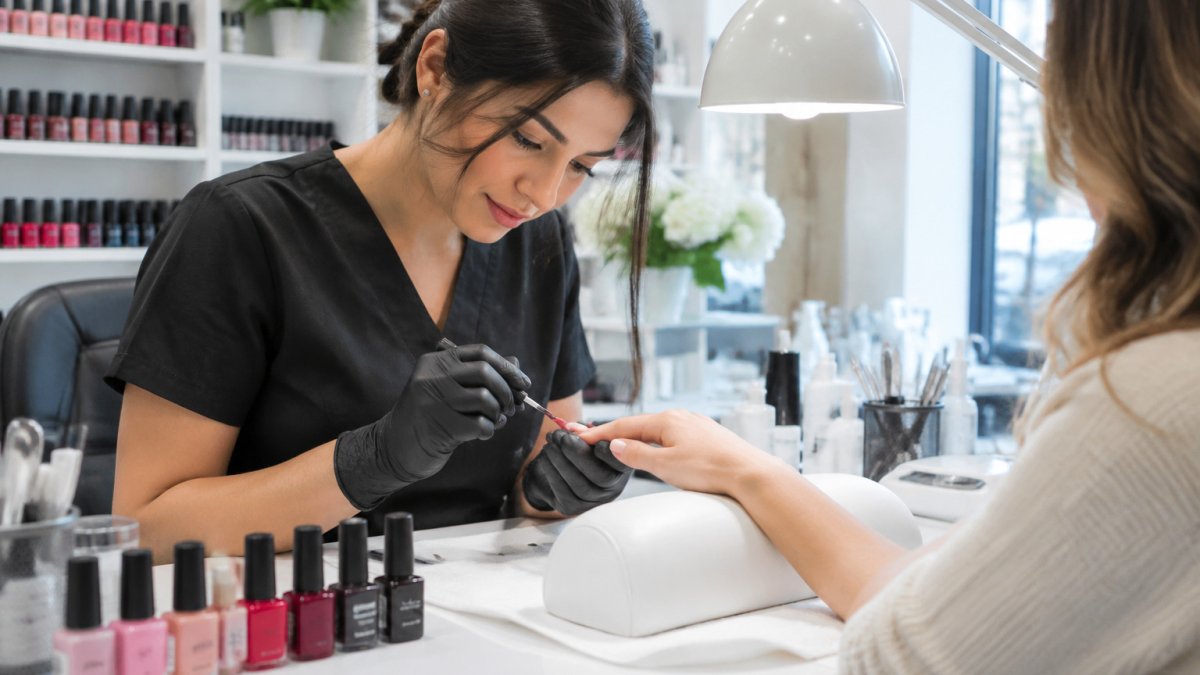
Apply the base coat, cure it, then build colour in thin layers. Two thin coats usually give better coverage and a smoother surface than one thick coat, which can wrinkle or stay soft in the centre. Cure each layer for the time the manufacturer specifies, typically around 30 to 60 seconds under an LED lamp, and always finish with a top coat that seals the edges.
Watch out: a thick coat that is not fully cured can stay tacky underneath and peel within days. Thin layers and full curing matter more than speed.
Choosing a Curing Lamp for Your Gel Polish
A curing lamp is not a universal accessory: it has to match the gel system you use. Most professional gel brands formulate their polish for a specific lamp wattage or wavelength range, and using the wrong lamp is one of the most common reasons a gel manicure fails early. Before you buy, check the product listing or the brand's technical sheet for the recommended lamp, and confirm the wavelength range the formula is designed for. If the listing does not state a lamp, treat that as a warning sign rather than a green light.
For a practical compatibility check, compare lamps on four points: wattage, wavelength range, timer options, and whether the lamp is designed for hands only or hands and feet. Wattage affects cure speed and penetration, but higher wattage is not automatically better if the gel is formulated for a lower-output lamp. Wavelength matters because some formulas cure best under a specific range, and a lamp outside that range can leave the surface under-cured even when the timer runs full length. Timer options matter for consistency: a lamp with preset 30- and 60-second cycles is easier to use correctly than one with a single on/off switch.
Cure time is where most home users go wrong. Follow the manufacturer's stated time for each layer rather than shortening it to save a minute. A common pattern is 30 to 60 seconds per coat under an LED lamp, but that range is not universal, and a thick coat may need the full stated time plus a second cycle. Watch out: under-cured gel can look and feel dry on top while staying soft underneath, and it will peel or lift within days. If a nail feels tacky after curing, put it back under the lamp rather than adding more top coat.
Lamp hygiene also affects results. Wipe the lamp's reflective surfaces and glass plate regularly, because dust and polish mist reduce the light reaching the nail. Replace lamps that no longer cure a test swatch evenly, and keep a spare lamp on hand if you run a salon so a failed unit does not stall your bookings. Our Best Nail Lamp For Gel Comparison Guide walks through these differences side by side, so you can match a lamp to your volume and budget before you commit.
Gel Polish Removal Without Damaging Your Nails
Gel should be removed by soaking rather than peeling or picking. Peeling takes the top layers of the natural nail with it and leaves nails thin and weak, and the damage can take weeks to grow out. The safe method is to file the top coat to break the seal, soak cotton pads in pure acetone, wrap each finger in foil, and wait 10 to 15 minutes before gently pushing the softened gel away with a cuticle pusher. Finish by buffing the nail lightly and applying cuticle oil.
OPI Gel Colour - Bare My Soul #GCSH4 →
There is more than one removal route, and the trade-offs matter. A full acetone soak is the most reliable method for standard gel systems, but it is drying and takes time.
Watch out: soaking longer than the product needs does not make removal easier; it dries the nail plate and surrounding skin. If the gel is not lifting after the stated soak time, re-wrap and wait a few more minutes rather than forcing it. Clients who remove gel often should take a short break between sets so the nail plate can recover, and a cuticle oil routine between appointments helps offset the drying effect of acetone.
Removal is also a good time to check for lifting, discolouration or brittleness that might point to a problem worth discussing with a professional. If the nail looks green, unusually soft, or painful, stop and refer the client rather than continuing the service. Keeping a removal log for frequent clients, noting soak time and any sensitivity, makes it easier to spot a pattern before it becomes a bigger issue.
Gel Polish vs Regular Nail Polish: Which Suits Your Clients
Gel and regular polish solve different problems. Gel offers longer wear, higher gloss and a durable finish that holds up to daily tasks. Regular polish is faster to apply, easier to remove and simpler for clients who like frequent colour changes or want to skip the lamp altogether.
For a client who wants a manicure to last through a holiday or a busy work week, gel is usually the right call. For a client who likes to change colours weekly, or who has a sensitivity to the products used in gel systems, regular polish may be the better choice. You can read more about how the two compare in our [guide to DND gel versus DND polish](https://www.classiquesupply.com).
Classique's Gel Polish Picks Compared
Our current gel picks cover a range of shades and price points. The table below summarises the main options in our catalogue so you can see the differences at a glance.
| Product | Finish | Starting Price (CAD) | Best For |
|---|---|---|---|
| OPI Gel Colour - Bare My Soul #GCSH4 | Sheer nude | $19.45 | Everyday, natural looks |
| OPI Gel Colour - Big Apple Red #GCN25 | Full-coverage red | $19.45 | Classic statement manicures |
| OPI Gel Colour - Alpine Snow #GCL00 | Opaque white | $19.45 | Nail art bases and clean looks |
| CND Shellac (HEMA/TPO-Free) - Moonlight & Roses #419 | Soft white | $22.45 | Clients who want the CND system |
| DND Gel & Lacquer Duo - Nail Butter #027 | Nude | $14.95 | Budget-conscious gel-and-lacquer pairing |
The OPI shades listed are vegan and HEMA-free, and the CND Shellac listing states it is formulated without free monomeric HEMA or TPO. Check each listing for its full ingredient information before recommending a product to a sensitive client.


Start Your Next Gel Set With Classique
Gel nail polish rewards careful preparation, thin layers and the right lamp. If you are ready to put these steps into practice, browse our full range of gel polish, lamps and removal supplies at Classique Nail Supply. Browse the gel polish products above and find the shades your salon or home routine needs.
Frequently Asked Questions
How long does gel nail polish last?
When applied and cured correctly, gel nail polish typically lasts about two to three weeks without chipping or fading. The OPI shades in this range are rated for about three weeks of wear, and CND Shellac is rated for up to 21 days. Wear time depends on proper nail prep, thin coats, full curing under the correct lamp, and avoiding harsh chemicals on the nails. Lifting near the cuticle is usually a sign of incomplete prep or a missed cure.
Is gel nail polish better than regular nail polish?
Gel nail polish lasts longer and cures to a high-gloss finish that resists chips and smudges, which is why many salons use it for clients who want a manicure that holds up for weeks. Regular polish is faster to apply, needs no lamp, and is easier to remove at home. The better choice depends on how long the client wants the colour to last and how much time and equipment you have for each service.
Do you need a UV or LED lamp for gel nail polish?
Yes. Gel polish is designed to harden under UV or LED light, and it will not cure properly on its own. Most gel systems are built for a specific lamp type, so check the product listing before buying. For example, the OPI shades on Classique are listed for use with the OPI LED Nail Lamp, and CND Shellac is designed for the CND system and CND Lamp. Under-cured gel is more likely to peel or lift.
Can you use gel nail polish without a base coat?
A base coat helps gel polish grip the natural nail and reduces the chance of lifting. Skipping it can shorten wear time and increase the risk of staining the nail plate, especially with deeply pigmented shades. OPI lists a gel base coat and top coat as pairings for its gel colours, so using the full system gives the most consistent results for salon clients.
