
Table of Contents
- Why Salons Are Switching to Non Toxic Nail Polish
- What Makes a Nail Polish Non Toxic?
-
10 Non Toxic Nail Polish Brands Built for Salon Use
- 1. Ella+Mila: The 17-Free Standard
- 2. Zoya: Professional-Grade Color and Wear
- 3. Tenoverten: Non Toxic Meets High-Gloss Finish
- 4. Kure Bazaar: Bio-Sourced Ingredients in Action
- 5. Suncoat: Water-Based Formulas for Sensitive Clients
- 6. Karma: Vegan-Friendly and Cruelty-Free Color
- 7. SOPHi: Eliminating Solvent Odors on the Floor
- 8. Pacifica: Accessible 12-Free Options
- 9. Piggy Paint: Water-Based for Kids and Clients Alike
- 10. Smith & Cult: Long-Wear With a Cleaner Profile
- Non Toxic Nail Polish Comparison Table
- How We Evaluated These Brands for Professional Use
- Compliance and the Health Canada Cosmetic Ingredient Hotlist
- Where to Buy: Best Professional Nail Supply in Canada
- How to Market Clean Beauty Services in Salons
- Frequently Asked Questions
Last Updated: September 9, 2026
Why Salons Are Switching to Non Toxic Nail Polish
The global non-toxic nail polish market is forecasted to reach USD 4.18 billion by 2035, growing at a CAGR of 5.05% as consumer interest in clean nail care accelerates (Market Research Future non-toxic nail polish market report, 2026). For salon owners, this isn't just a trend; it's a response to mounting evidence about chemical exposure. A 2025 review published by the National Center for Biotechnology Information found that 15 out of 25 brands labeled "hypoallergenic" still contained at least one restricted or toxic substance, a statistic that raises serious questions about the products you currently stock.
This guide breaks down the 10 non toxic nail polish brands for salons that balance clean ingredient profiles with the durability and pigmentation your floor demands.
What Makes a Nail Polish Non Toxic?
Non toxic nail polish is a formula that excludes known carcinogens, endocrine disruptors, and respiratory irritants commonly found in traditional solvent-based lacquers. The definition refers to a product's entire chemical profile, including its solvents, resins, plasticizers, and pigments, not just one headline ingredient.
Most professional-grade non toxic formulas build their base around water or safer solvent alternatives rather than the traditional cocktail of toluene, formaldehyde, and dibutyl phthalate (DBP). The shift toward water-based solvent formulas is notable, with brands using water as the primary carrier to eliminate traditional solvent odors and chemical exposure (My Chemical Free House analysis of water-based nail polish, 2025).
Decoding the X-Free Labeling System
The "X-Free" labeling system is a countdown of excluded chemicals, from 3-Free to 21-Free. A 10-free formula excludes ten specific ingredients, while a 21-free formula excludes twenty-one. Market availability has expanded to include formulas ranging from 10-free to 21-free, signaling a broader removal of chemicals across the industry (NonToxicLab review of non-toxic nail polish brands, 2026).
Here is the catch most guides miss: marketing a product as "X-Free" does not guarantee it is entirely non-toxic. It only indicates the absence of specific chemicals, while others may still be present (Healthline's guide to nail polish safety, 2025). A 21-free polish could still contain an undisclosed plasticizer or a solvent with low-level toxicity.
Key Ingredients to Avoid and Why
When reviewing product data sheets for your salon, screen for these ingredients first:
- Toluene: A solvent linked to respiratory issues and developmental concerns
- Formaldehyde: A known carcinogen used as a hardener
- Dibutyl phthalate (DBP): A plasticizer banned in cosmetics in several regions due to endocrine disruption
- Camphor: Added for gloss but can cause skin irritation and is toxic in high doses
- Triphenyl phosphate (TPHP): A plasticizer flagged as a potential endocrine disruptor
- Xylene: A solvent with neurotoxic potential
- Ethyl tosylamide: A plasticizer that can trigger allergic reactions
10 Non Toxic Nail Polish Brands Built for Salon Use
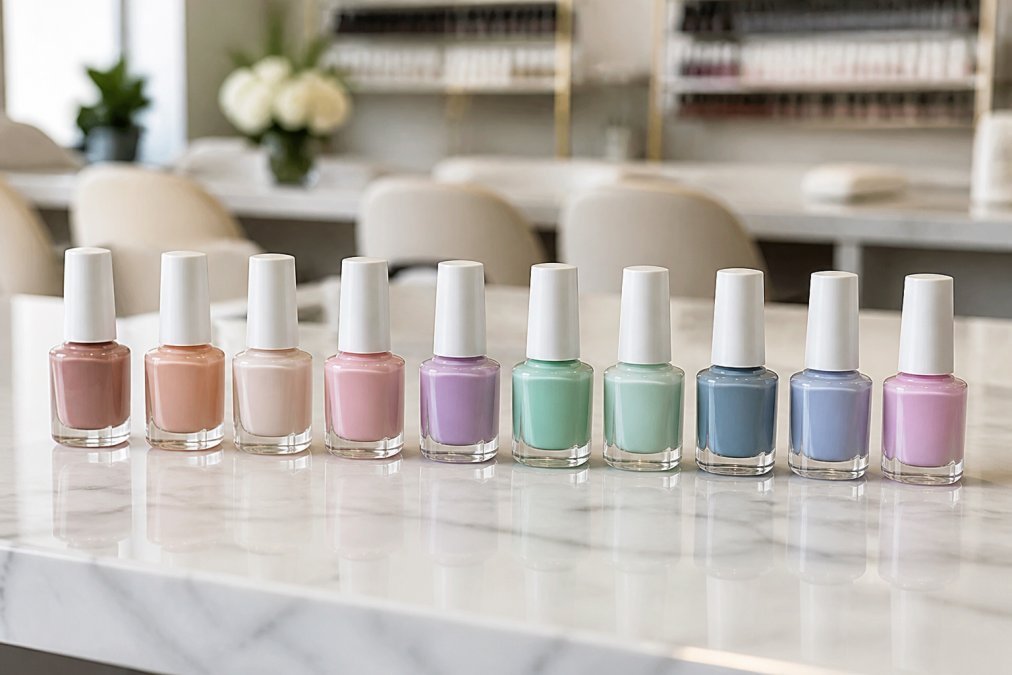
The brands below represent the current standard for professional-grade clean formulas. Each has been evaluated for its ingredient profile, wear performance, and suitability for high-traffic salon environments. Leading brands identified in 2026 industry analysis for non-toxic formulations include Ella+Mila, Zoya, Tenoverten, Suncoat, Kure Bazaar, and Karma (NonToxicLab best non-toxic nail polish guide, 2026).
1. Ella+Mila: The 17-Free Standard
Ella+Mila sets a high bar with its 17-free formula, excluding a broad spectrum of chemicals while maintaining a chip-resistant finish. Their polishes are vegan-friendly and cruelty-free, certified by PETA, with a dedicated line for moms and kids.
Two coats deliver opaque, salon-ready color across most of their 100-plus shade range. Expect roughly five to seven days of chip-free wear without a gel top coat. Ella+Mila requires a slightly longer drying window between coats.
2. Zoya: Professional-Grade Color and Wear
Zoya is the veteran of the clean polish movement, offering a 10-free formula that has been a staple in professional settings for over three decades. Their color library exceeds 300 shades, built on a bio-sourced resin base rather than traditional nitrocellulose.
In salon testing, Zoya performs best with its own base and top coat system; the color coat alone shows tip wear by day four, but the full system extends longevity to a full week. Their Breathable line allows water and oxygen through the film.
3. Tenoverten: Non Toxic Meets High-Gloss Finish
Tenoverten delivers an 8-free formula prioritizing a high-gloss finish without ethyl tosylamide, a common allergen. Founded by salon owners, the brand's wide, flat brush covers the nail bed in two strokes.
The formula's viscosity sits between a traditional lacquer and a gel-effect polish. It self-levels well but requires a steady hand to avoid pooling in the cuticle area. Tenoverten's shade range leans toward muted, sophisticated tones, making it an excellent choice for spas and salons catering to a professional clientele.
4. Kure Bazaar: Bio-Sourced Ingredients in Action
Kure Bazaar takes a different approach with an 87% bio-sourced formula, deriving most ingredients from renewable plant sources rather than petroleum. The brand excludes 21 chemicals, using corn and wheat derivatives instead of petrochemical solvents.
This bio-sourced approach produces a mild, earthy scent during application, a significant advantage for salon ventilation. The performance tradeoff appears in dry time; the formula takes longer to fully cure than solvent-based options, requiring either extended service time or a quick-dry spray.
5. Suncoat: Water-Based Formulas for Sensitive Clients
Suncoat specializes in water-based nail polish, replacing solvent carriers entirely with water. This makes their products among the lowest in chemical exposure on the market, critical for pregnant clients, those with multiple chemical sensitivities, or reactions to traditional lacquers.
Water-based polish has a thinner viscosity and requires a lighter touch to avoid streaking. It dries by water evaporation, remaining permeable for the first few hours, so schedule these for clients who won't be washing dishes immediately afterward.
6. Karma: Vegan-Friendly and Cruelty-Free Color
Karma Organic Spa Nail Polish brings a 10-free, vegan-friendly formula with botanical extracts like lavender and aloe, providing a smoother application glide and reducing drying effects. The brand holds Leaping Bunny certification.
The color payoff is strong, with creamy opacity covering nail discoloration in two coats. Karma's line is particularly strong in nudes and soft pinks, practical for high volumes of natural nail manicures and French tips. Packaging uses recycled glass and soy-based inks. non-toxic nail salons.
7. SOPHi: Eliminating Solvent Odors on the Floor
SOPHi is known for its water-based formula designed to eliminate solvent odors in professional environments. The formula is 91% natural, excluding toluene, formaldehyde, DBP, and camphor.
SOPHi genuinely shines in the absence of odor, making a measurable difference in air quality in closed salon environments during winter. The brand's color range is curated, focusing on wearable neutrals and classic reds. The polish requires a specific top coat from the same line to achieve its advertised seven-day wear.
8. Pacifica: Accessible 12-Free Options
Pacifica offers a 12-free formula at a price point that makes clean color accessible for salons testing the category without major inventory investment. The brand is widely available and well-known in clean beauty.
The formula performs well for a standard lacquer, with a glossy finish rivaling higher-priced competitors. Pigmentation varies by shade; brighter colors require three coats, deeper shades cover in two. Its strength is approachable pricing and easy seasonal color rotation.
Shop Our Back To School Mystery Boxes! →
9. Piggy Paint: Water-Based for Kids and Clients Alike
Piggy Paint is a water-based formula developed for children, but its low-odor, non-toxic profile suits adult clients with extreme sensitivities. The brand is dermatologist-tested, free from formaldehyde, toluene, DBP, and other harsh chemicals, and safe if accidentally ingested.
The polish dries to a matte finish, a departure from the high-gloss look most adult clients expect. For salons, Piggy Paint is best positioned as a specialty service for kids' manicures and parties.
10. Smith & Cult: Long-Wear With a Cleaner Profile
Smith & Cult positions itself as a luxury color brand with a conscience, offering an 8-free formula that does not compromise on high-fashion aesthetics. The signature weighted glass bottle with a gold cap adds premium retail appeal.
Smith & Cult's "locked" color system delivers up to eight days of chip-resistant wear in testing. The polish is quick-dry, keeping service times efficient, with an edgy, fashion-forward shade range.
Non Toxic Nail Polish Comparison Table
| Brand | Free-From Level | Formula Base | Best For | Notable Feature |
|---|---|---|---|---|
| Ella+Mila | 17-Free | Solvent | High-volume salons | PETA-certified vegan |
| Zoya | 10-Free | Bio-sourced resin | Large color selection | Breathable line available |
| Tenoverten | 8-Free | Solvent | Spa/quiet luxury | Wide brush applicator |
| Kure Bazaar | 21-Free | 87% bio-sourced | Eco-conscious clients | Plant-derived solvents |
| Suncoat | Water-based | Water | Sensitive clients | Lowest chemical exposure |
| Karma | 10-Free | Solvent + botanicals | Natural nail services | Leaping Bunny certified |
| SOPHi | Water-based | Water | Air quality focus | No solvent odor |
| Pacifica | 12-Free | Solvent | Budget-friendly retail | Widely recognized brand |
| Piggy Paint | Water-based | Water | Kids' services | Safe if ingested |
| Smith & Cult | 8-Free | Solvent | Luxury market | Premium packaging |
How We Evaluated These Brands for Professional Use
We assessed each brand against three criteria: performance under professional conditions, chemical safety data for staff, and consistency of supply. A polish that chips on day two or a brand that is perpetually backordered fails the test.
Performance Testing Under Salon Conditions
Solvent-based non toxic polishes generally performed closer to traditional lacquers in wear tests, while water-based options required more application skill and offered shorter wear windows.
We recommend trialing two to three brands on actual clients for two weeks before committing to a full inventory purchase, as what works for a nail art specialist may frustrate a high-volume classic manicure technician.
Chemical Safety Data for Salon Staff
The conversation about non toxic polish often centers on the client, but the salon staff face the greater cumulative exposure. Technicians apply polish dozens of times daily, inhaling solvent vapors and absorbing ingredients through skin contact. Research published by the National Center for Biotechnology Information highlights that products marketed as hypoallergenic can still contain restricted or toxic substances, underscoring the need for salons to verify safety data sheets rather than trust marketing claims.
When evaluating a brand for staff safety, request the full ingredient disclosure and cross-reference it with the Health Canada Cosmetic Ingredient Hotlist. A brand that cannot provide transparent ingredient documentation should raise a red flag.
Compliance and the Health Canada Cosmetic Ingredient Hotlist
Health Canada regulates cosmetics under the Food and Drugs Act and the Cosmetic Regulations. The Cosmetic Ingredient Hotlist communicates substances that are prohibited or restricted for use in cosmetics, and products found to contain prohibited substances can be subject to enforcement action.
For salon owners, compliance means verifying that the polish brands you stock do not contain ingredients on the Hotlist, particularly when sourcing from international brands, as formulations can vary by market.
Where to Buy: Best Professional Nail Supply in Canada
For Canadian salon owners, sourcing non toxic nail polish requires a distributor that understands both the regulatory landscape and professional performance demands. Classique Nail Supply is Canada's trusted leader in professional nail, hair, and beauty supplies, providing access to industry-leading brands with fast shipping across the country.
What distinguishes Classique Nail Supply is the combination of a complete selection of premium products and wholesale options for Hema-Free and vegan nail products, allowing salon owners to consolidate their ordering. For a salon adding clean polish options, the Gelish Vitagel Recovery 0.5Oz at $20.95 is a complementary addition, a nail strengthener that supports nail plate health between color applications.

The Kokoist X Nail Thoughts Tinted Base Gel, priced at $26.35, offers a builder gel option for clients who want strength and a subtle tint in one step. For removal, the Bio Seaweed Gel Unpolished+ at $11.95 provides an acetone-free solution that aligns with a cleaner service menu.


How to Market Clean Beauty Services in Salons
Salons that add non toxic nail polish options gain a distinct marketing advantage, but only if positioned correctly. Clients want the same durability and finish they expect from traditional products, with the added peace of mind of safer ingredients.
Effective marketing starts with staff education. Your technicians must be able to explain what makes a polish non toxic and why it matters, and your front desk team should mention the option during booking.
The second pillar is transparency. Publish your clean beauty policy on your website, listing the brands you use and the standards they meet.
Choosing the right non toxic nail polish for your salon is a balance of ingredient safety, performance, and client expectations. The 10 brands profiled here represent the strongest options currently available, each with distinct strengths that suit different salon models. Get started with Classique Nail Supply and build a clean beauty offering that sets your salon apart.
Frequently Asked Questions
What is the cleanest non-toxic nail polish for professional use?
The cleanest options are typically water-based formulas from brands like Suncoat or SOPHi, which use water as the primary solvent instead of chemicals. For solvent-based polishes, look for the highest X-Free rating available, such as 17-free from Ella+Mila or 21-free from Kure Bazaar. A 2025 PMC review found that 15 out of 25 brands labeled hypoallergenic still contained restricted substances, so verify the full ingredient list rather than trusting marketing claims alone.
Are there Health Canada regulations regarding nail polish ingredients?
Yes. Health Canada maintains the Cosmetic Ingredient Hotlist, which restricts or prohibits certain substances in cosmetics sold in Canada, including nail polish. However, the Hotlist does not require pre-market approval, so salon owners should still check labels against the list. Products compliant with the Hotlist are legal for sale, but X-Free labeling goes beyond these requirements to address additional chemicals of concern like formaldehyde, toluene, and dibutyl phthalate (DBP).
Do non-toxic professional polishes compare in durability to traditional formulas?
Yes, modern non-toxic formulas perform competitively. Solvent-based clean polishes from brands like Zoya and Tenoverten offer wear comparable to conventional lacquers, typically 7 to 10 days with proper base and top coats. For gel services, look for Hema-Free options. The Gelish Vitagel Recovery system, for example, provides up to 21 days of wear and cures in 30 seconds under an LED lamp, making it a strong choice for salons.
Do non-toxic nail polishes require different base or top coats?
Often, yes. Water-based polishes like those from Suncoat require a compatible water-based top coat to adhere properly and achieve a high-gloss finish. Solvent-based non-toxic polishes generally work with standard base and top coats, but pairing them with a clean-brand system can optimize longevity. For gel services, use a matching base and top coat from the same system, such as CND Shellac Base and Top, to ensure proper adhesion and wear.
What is the best non-toxic nail polish brand for a busy salon in Canada?
For a high-traffic salon, prioritize brands with proven durability and reliable wholesale supply. Zoya and Ella+Mila offer extensive color ranges with strong wear. For water-based services, Pure Anada simplifies sourcing. Your choice should also factor in the Health Canada Cosmetic Ingredient Hotlist compliance and staff exposure to solvent odors. Ordering through a Canadian distributor ensures faster restocking and avoids cross-border shipping delays.