
Table of Contents
- Why Professional Skincare Products Matter in Nail Salons
- Pedicure and Foot-Care Supplies That Deliver Results
- Professional Pedicure Supplies Wholesale: Building Your Inventory
- How to Upsell Skincare Services in a Nail Salon
- Health Canada Cosmetic Regulations for Salons
- Product Selection Guide: Matching Skincare to Service Type
- Frequently Asked Questions
Last Updated: October 15, 2026
Why Professional Skincare Products Matter in Nail Salons
Professional skincare products for nail salons are now essential to a competitive service menu. Clients expect hand and foot treatments that leave skin refreshed, hydrated, and visibly improved.
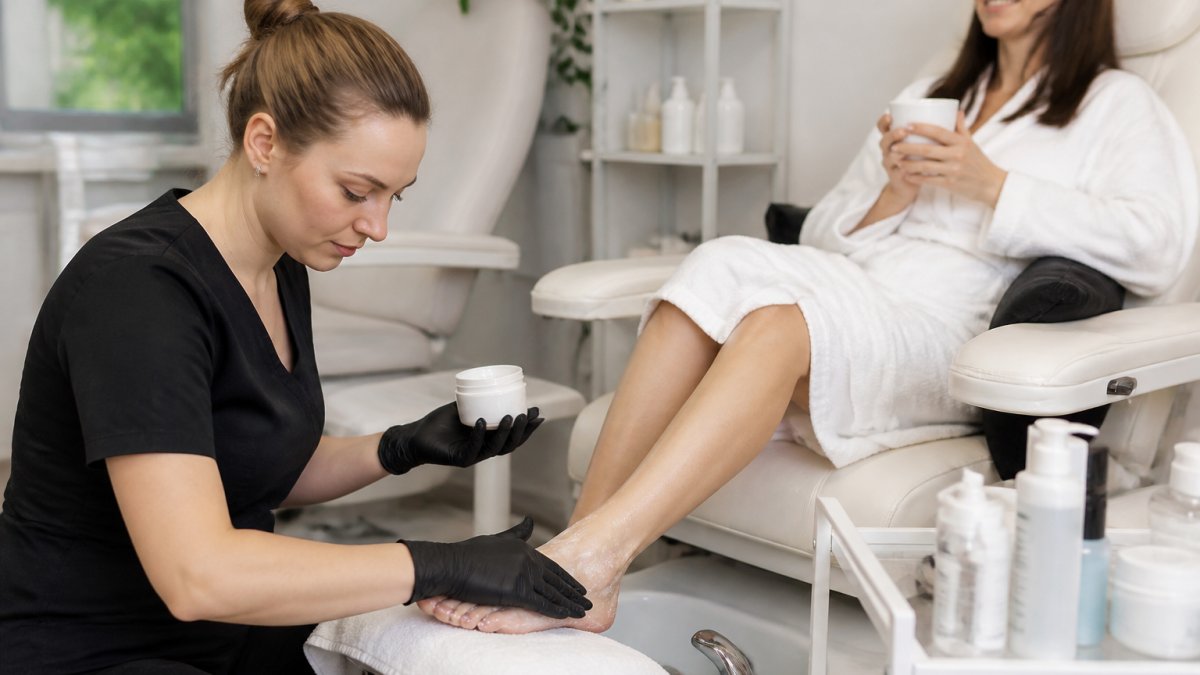
The difference between generic lotion and clinic-grade skincare is measurable: clients notice smoother cuticles, softer heels, and healthier nails, and they return more often and spend more per visit. At Classique Nail Supply, salons stocking professional-grade products often report higher satisfaction and repeat bookings.

Research into salon worker safety has highlighted concerns about chemical exposure in nail environments. Studies published in PubMed Central document dermatologic conditions affecting nail salon workers, while the UCLA Labor Center's research on nail salon workers calls for better product safety standards and environmental controls.
Pedicure and Foot-Care Supplies That Deliver Results
Pedicure services generate significant revenue when paired with the right skincare products. Clients spend 30-45 minutes in the chair, ample time to transform rough, tired feet into soft, polished skin.
Select products that work fast and show visible results. Callus removal treatments, hydrating masks, and specialty foot creams turn a basic pedicure into a premium experience. Classique Nail Supply carries professional pedicure supplies wholesale, including bulk options at competitive margins.
Callus Removal and Softening Treatments
Thick calluses on heels and soles are the most common foot complaint. Professional callus softeners break down hardened skin, making manual removal safer and faster.
The CND Pro Skincare For Feet line includes the Callus Smoother (10.1oz) at $41.94, a gel-based treatment that softens calluses in 3-5 minutes.

For high-volume salons, the Footlogix #18 Professional Callus Softener (1 litre) at $175.00 offers better unit economics: one litre covers dozens of pedicures, cutting per-service cost with the same results.
Cuticle Care and Nail Health Products
Cuticles frame the nail and signal overall nail health. Professional cuticle removers dissolve dead skin without clippers or nippers, reducing infection and ingrown nail risk.
The Blue Cross Cuticle Remover #4219 (32oz) at $16.00 is a proven choice.
Trusted by manicurists for over 90 years, its long shelf life and low price suit salons stocking multiple product lines; one 32oz bottle lasts weeks in a busy salon.
Professional Pedicure Supplies Wholesale: Building Your Inventory
Wholesale purchasing is where salon profitability gains traction, but the mechanics matter more than the markup. Buying at retail caps your margin before you touch a client; a wholesale account lets you buy at cost and mark up 40-60%, turning product into a second revenue stream independent of chair time.
How Wholesale Pricing Actually Works
Most professional distributors structure pricing in tiers rather than a flat discount:
- Opening order / starter tier: a modest minimum (often a few hundred dollars) that unlocks wholesale pricing on a limited catalog.
- Standard salon tier: a higher minimum that unlocks the full professional range plus better per-unit pricing on high-turnover items.
- Volume / multi-location tier: negotiated pricing for salons running several stations or multiple locations, usually tied to quarterly spend.
Ask three questions before opening an account: What is the minimum opening order? What is the reorder minimum? What is the typical lead time to your region? A domestic distributor restocks faster with less customs friction.
The Real Math: Cost Per Service, Not Cost Per Bottle
A $175.00 litre of callus softener sounds expensive next to a $41.94 bottle, but it's cheaper per pedicure. Work it out per service:

- Estimate how many treatments a container yields (a litre of softener typically covers dozens of pedicures; a 10.1oz tube covers a handful).
- Divide the container price by the number of treatments.
- Compare that per-service cost against the upsell price you charge for the add-on.
If a callus treatment adds $12 to a pedicure and product costs a dollar or two per treatment, the margin is healthy. If per-service cost creeps toward half the upsell price, you're over-applying or using the wrong format for your volume.
Matching Format to Volume
| Salon Profile | Best Format | Why |
|---|---|---|
| 1-2 stations, low volume | Small tubes and bottles | Lower upfront cash, less product sitting on the shelf |
| 3-5 stations, steady flow | Mid-size bottles plus one bulk item | Balances cash flow against per-service cost |
| 6+ stations, high turnover | Bulk litres and pro sizes | Lowest cost per treatment, fewer reorders |
Storage, Shelf Life, and Shrinkage
Bulk sizes only save money if the product stays usable. Store bulk containers away from sun and the pedicure station's warm, humid zone, decant working amounts into labeled bottles, and keep the bulk container sealed to cut contamination and waste.
Turning Service Products Into Retail SKUs
Not every professional product belongs on your retail shelf. The best retail candidates reinforce the result a client just paid for and can be used at home: cuticle oil, hand cream, maintenance foot cream. Keep heavy professional treatments, callus softeners, professional-strength exfoliants, behind the service menu, where a trained technician controls application.
A workable split:
- Service-only: professional-strength softeners, peels, and treatment masks.
- Retail-friendly: cuticle oil, hand and foot moisturizers, gentle exfoliating scrubs, aftercare kits.
Inventory Planning Without Overbuying
Start with your top three services and stock only what they need. Add a SKU when you can name the service it supports and roughly how often it's used, and reorder on a schedule tied to usage rate rather than impulse. Salons that plan inventory around service volume carry less dead stock and rarely run out of revenue-driving products.
How to Upsell Skincare Services in a Nail Salon
Upselling skincare doesn't feel pushy when it's genuinely beneficial. Position products as solutions to problems clients already mention.
Kokoist Hybrid LED/UV Nail Lamp - Le Blanc Cordless →
Listen during the service.
Timing matters. Introduce products mid-service when clients are relaxed and engaged.
Train staff to recommend based on service type. Every pedicure should include a cuticle treatment recommendation.
Track which products convert. If foot masks never sell but callus treatments fly, emphasize callus care in your service menu and staff training.
Health Canada Cosmetic Regulations for Salons
Salon owners must understand cosmetic regulations to stay compliant and protect clients. Health Canada defines cosmetics as products applied to the body to clean, beautify, or alter appearance.
Cosmetics sold or used in salons must be labeled with ingredient lists, warnings, and manufacturer information.
Salons must ensure all products are approved for use in Canada. Imported products require Health Canada compliance documentation.
Keep product documentation on file: maintain safety data sheets (SDS) for all professional-use products, train staff on application, contraindications, and patch testing, and document any adverse reactions.
Product Selection Guide: Matching Skincare to Service Type
Different nail services pair best with specific skincare products, but the right pick depends on the service, the client's skin, and your hygiene workflow. Strategic matching maximizes results and protects you when a client has a sensitivity or contraindication. Adjusting your inventory to include specialized skincare for mature skin ensures that clients with thinning or delicate textures receive the gentle, restorative care necessary to complement their manicure.
Match Products to the Service
| Service Type | Recommended Products | Key Benefit | Client Experience |
|---|---|---|---|
| Classic Pedicure | Callus softener, foot cream | Smooth heels, healthy nails | Visible transformation in 30 minutes |
| Gel Manicure | Cuticle remover, hand cream | Longer-lasting polish, healthier nail beds | Prepares nails for flawless application |
| Acrylic Nails | Cuticle care, nail oil | Stronger natural nails underneath | Reduces breakage during removal |
| Spa Pedicure | Callus treatment, foot mask, cuticle care | Premium experience, full foot treatment | Justifies higher pricing tier |
| Gel Removal | Cuticle oil, hand moisturizer | Rehydrates nails post-removal | Prevents brittleness and peeling |
Manicure clients benefit most from cuticle treatments; gel adheres better to clean cuticle areas and removal is less traumatic. Pedicure clients want callus solutions and foot hydration; gel removal clients need intensive hand and nail rehydration.
Know the Ingredients You Are Working With
You don't need a chemistry degree, but you should be able to read a label and explain it to a client.
- Lanolin and glycerin: humectants and emollients that draw in and hold moisture. Lanolin is a common allergen; flag it for sensitive clients.
Skin Suitability and Contraindications
Before any exfoliating or softening treatment, ask two questions: Do you have any skin conditions I should know about? Have you had a reaction to a skincare product before?
Skip or modify aggressive treatments when a client has:
- Cracked, bleeding, or open skin: no acids or strong softeners over broken skin.
- Active fungal or bacterial infection: treat as a contraindication and refer out.
- Diabetes or circulatory conditions: avoid aggressive callus removal and sharp tools; use gentler chemical softening and refer to a healthcare provider for foot concerns.
- Known allergies: check the ingredient list against the client's known triggers before applying.
Hygiene, Dispensing, and Cross-Contamination
Professional skincare lives or dies on clean workflow. A few habits prevent most problems:
- Never double-dip. Use a clean spatula, pump, or single-use applicator to remove product from its container. Fingers and used tools carry bacteria straight into the jar.
- Decant, do not dip. Pour or pump a working amount into a small dish and apply from there. Discard what is left rather than returning it to the container.
- Single-use where it counts. Files, buffers, and applicators that touch skin should be single-use or properly disinfected between clients.
- Label and date. Once a product is opened or decanted, mark the date so you can rotate stock and retire anything past its usable window.
- Clean between clients. Disinfect tools, wipe containers, and change linens and towels for every service.
Stock to Your Actual Service Mix
Stock products that match your most popular services. If 60% of revenue comes from gel manicures, prioritize cuticle removers and hand creams; if pedicures dominate, invest in callus treatments and foot masks. Layer in a small fragrance-free, sensitive-skin option so you never turn away a reactive client.
Frequently Asked Questions
What skincare products should be included in a professional pedicure service?
A complete professional pedicure requires callus softeners, exfoliating treatments, cuticle care products, and moisturizers. The CND Pro Skincare For Feet Callus Smoother ($41.94) breaks down hardened skin on heels and soles, while the Blue Cross Cuticle Remover ($16.00) addresses cuticle care with a lanolin-enriched formula. Professional-grade products like these ensure consistent results and client satisfaction across every service.
Are there specific Health Canada regulations for skincare products used in salons?
Yes. Health Canada regulates cosmetic products. Salon skincare products must be properly labeled, contain approved ingredients, and meet safety standards. Licensed estheticians and nail technicians must understand product claims, ingredient restrictions, and cross-contamination protocols. Always verify that professional skincare lines comply with Health Canada's cosmetic ingredient regulations before stocking them.
How do I choose the right professional skincare line for my nail salon?
Evaluate products based on service type, client skin concerns, and ingredient safety. Consider whether you're targeting callus removal, hydration, or cuticle care. Look for clinic-grade formulations with clear application instructions and safety data. Products like Footlogix Professional Callus Softener (1 litre, $175.00) suit high-volume salons, while smaller operations may prefer the CND Pro Skincare 10.1oz size ($41.94). Prioritize brands with proven professional-grade standards and reliable stock.
What is the difference between retail and professional-grade salon skincare?
Professional-grade products are formulated for licensed technicians and contain higher concentrations of active ingredients, faster-acting formulas, and larger sizes for salon use. Retail products are marketed to consumers for at-home use. Professional lines like CND Pro Skincare and Footlogix deliver superior results in controlled salon settings because technicians apply them correctly and can handle stronger formulations. Professional-grade also typically offers better wholesale pricing and bulk options for salon owners.
How can I increase revenue by offering skincare add-ons in my nail salon?
Bundle skincare treatments into service packages: offer callus removal add-ons to pedicure clients, upsell cuticle treatments with manicures, and create foot-care packages. Train staff to identify clients who need specific treatments, such as those with dry heels or damaged cuticles. Use professional products like the CND Callus Smoother or Blue Cross Cuticle Remover to deliver visible, immediate results that justify premium pricing. Educate clients on maintenance and recommend retail sizes for home care between salon visits.