
Last Updated: November 12, 2026
Quick Summary
A fast setting acrylic liquid monomer cures shortly after meeting the powder, giving you a shorter window to shape the bead before it hardens. It suits technicians who place a bead in one confident motion, while slower liquids give more working time for sculpting in stages.
- Working time and set speed move in opposite directions, so faster liquids leave less time to correct a bead.
- Warm a cold room before switching to a faster liquid, since cold temperatures already slow standard systems.
- Adjust ratio, temperature, airflow, bead size and brush pressure one at a time to control set time.
- Store monomer in a cool, dark spot with a tight lid and work near an extractor for ventilation.
- Test a small batch on a tip before a full set when pairing a new liquid with your powder.
Table of Contents
- What Fast Setting Means for Acrylic Liquid Monomer
- Fast vs. Slow-Setting Acrylic Monomer: Which Suits Your Work
- Five Fast Setting Monomers Worth Comparing
- Acrylic Powder and Liquid Monomer Compatibility
- How to Control Acrylic Setting Time on the Job
- Acrylic Monomer Storage and Safety in the Salon
- Choosing Your Fast Setting Monomer from Classique Nail Supply
- Frequently Asked Questions
What Fast Setting Means for Acrylic Liquid Monomer
A fast setting acrylic liquid monomer is a liquid that begins curing shortly after it meets the powder, leaving you a shorter window to shape the bead before it hardens. At Classique Nail Supply, we field questions about this trade-off every week, and the short answer is that speed is a tool, not a virtue. A monomer that sets quickly rewards a tech who already knows where the bead is going. It punishes anyone still deciding.
The liquid is only half the system. The powder, the room, and your brush control all change how fast that bead firms up.
How Set Speed and Working Time Interact
Working time is the gap between picking up the bead and losing the ability to move it. Fast-setting liquids shorten that gap. According to Mia Secret's guide to choosing a monomer, setting speed is the main factor that determines how much working time you get, so the two numbers move in opposite directions.
That is the whole trade. More seconds to sculpt means more seconds for the product to slide. Fewer seconds means cleaner placement but no room for correction.
Fast vs. Slow-Setting Acrylic Monomer: Which Suits Your Work
Fast-setting monomer suits technicians who build a bead and place it in one confident motion. Slower liquids suit anyone who sculpts in stages or works in a cold room. A nail supply buying guide notes that forgiving set times are often recommended for students and new home-based artists, which matches what we hear from schools ordering starter kits.
Cold working temperatures slow standard acrylic systems down, and some techs switch to a faster liquid to compensate. That works, but it narrows your margin for error at the same time.
Warm the space first.
Five Fast Setting Monomers Worth Comparing
Here are five liquids in our range that techs often ask about when they want a quicker set, so you can compare them side by side.
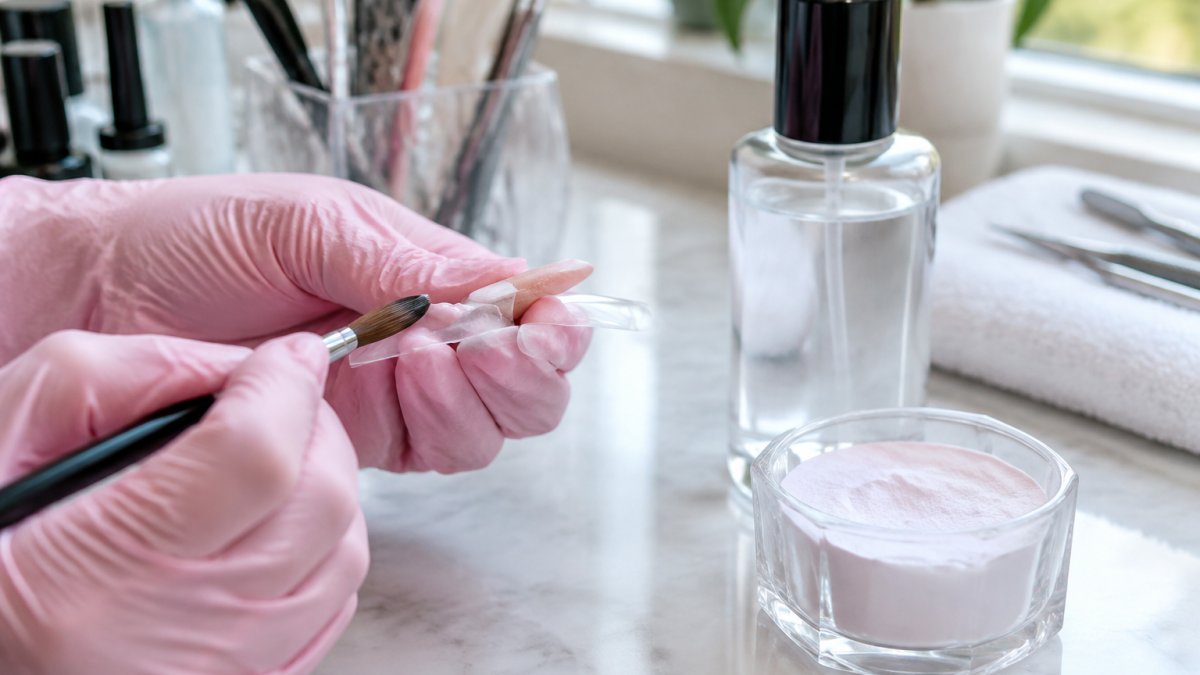
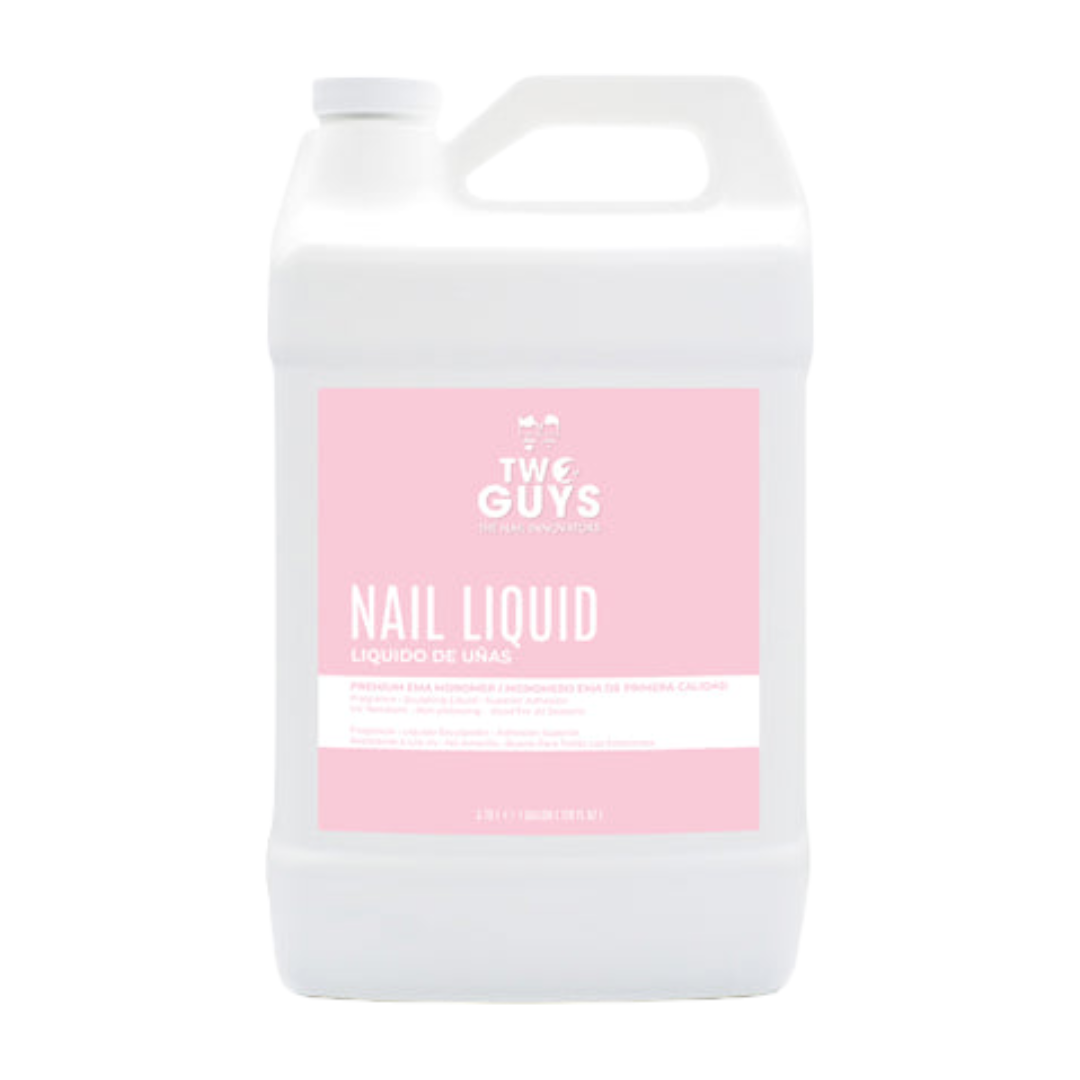
2Guys Nail Liquid Premium EMA Monomer (1Gal) is the bulk pick for a busy table. A full gallon at $230.00 CAD keeps a high-volume salon running without reordering every few weeks. The EMA base gives you a familiar feel if you have worked with standard monomers before. Always test a small batch first.
CND Odorless Sculpting Liquid is the one to reach for when fumes are the problem. It is free of MMA and EMA and HEMA-Free, with workability built for controlling placement. It is suited to clients with enhancements that are prone to lifting. At $45.59 CAD for 4oz, it is priced at $45.59 CAD for a 4oz bottle. You can shop the CND Odorless Sculpting Liquid alongside the rest of our monomer range.
Supernail Professional Liquid (2oz) is the smallest commitment on this list at $5.00 CAD. Buy it to try a faster set before you commit to a large bottle, or keep one in a travel kit. It is an EMA liquid priced for a low-risk trial before committing to a larger bottle.
Volcano Spa EMA Liquid State Board Pro+ (1Gal) runs $180.00 CAD for a gallon, the lowest per-ounce cost of the bulk options here. It is an EMA liquid built for volume work.
OPI Liquid Perfection Sculpting Monomer (30.8oz) is HEMA-Free and vegan, and it sits in the middle of the range at $88.16 CAD. The 30.8oz size suits a single tech who wants a branded liquid without a gallon on the shelf. You can compare the 2Guys gallon if you are weighing bulk against a mid-size bottle.
Quick Comparison at a Glance
| Product | Price (CAD) | Best For | Notable Detail |
|---|---|---|---|
| 2Guys Premium EMA Monomer | $230.00 | High-volume salons | EMA base, bulk value |
| CND Odorless Sculpting Liquid | $45.59 | Sensitive spaces | HEMA-Free, MMA and EMA free |
| Supernail Professional Liquid | $5.00 | Testing a faster set | Lowest entry cost |
| Volcano Spa EMA Liquid Pro+ | $180.00 | Volume work on a budget | EMA liquid, gallon size |
| OPI Liquid Perfection Monomer | $88.16 | Single-tech studios | HEMA-Free and vegan |
Price (CAD)
Best for: a salon doing back-to-back sets all day, the 2Guys gallon. Skip if: you work in a small room with poor airflow, where the CND odorless liquid is the better fit. Watch out: buying a fast liquid to compensate for a cold room can backfire if the bead sets before you finish shaping; warm the space first.
Acrylic Powder and Liquid Monomer Compatibility
Powder and liquid monomer compatibility decides whether your system behaves predictably. Powder and liquid are often designed to work as a pair, and mixing brands can change how a system behaves. The safest approach is to use a matched system from one brand until you understand how it performs, then experiment cautiously if you want to adjust working characteristics.
The powder-to-liquid ratio matters just as much. A wetter bead sets slower and self-levels more; a drier bead holds its shape but sets faster and can lift at the edges if you press it too thin. A common pattern is that technicians who switch liquids without adjusting ratio end up with runny beads or premature setting. Start with the manufacturer's recommended ratio, then adjust in small increments.
Terms like MMA-free and EMA-based describe the primary monomer chemistry, but they do not guarantee compatibility with every powder. Check the Safety Data Sheet (SDS) for the liquid and follow the manufacturer's guidance on powder pairing. If a liquid is HEMA-Free, confirm that your powder does not rely on HEMA for adhesion. When in doubt, test a small batch on a tip before a full set.
Troubleshooting common issues:
- Runny beads: usually too wet a ratio or a liquid that is too slow for your room temperature. Try a drier bead or a faster liquid.
- Lifting: often caused by a wet bead applied too thin, or by mixing incompatible powder and liquid. Check ratio and brand pairing.
- Poor adhesion: can result from surface prep issues or a powder that does not match the liquid's chemistry. Ensure proper nail prep and use a matched system.
- Yellowing: some powders and liquids yellow when mixed across brands or exposed to excessive heat. Stick to one system and cure under recommended conditions.
For a deeper walkthrough of how professional systems fit together, our guide to professional acrylic nail systems covers the pairing rules in more detail.
How to Control Acrylic Setting Time on the Job
You can slow a fast liquid down or speed a slow one up without changing bottles. These are the levers that actually move set time:
- Ratio: a wetter bead buys seconds; a drier bead costs them.
- Temperature: a cold room slows curing, a warm one accelerates it.
- Airflow: a direct fan or vent over the table pulls solvent away and firms the bead faster.
- Bead size: a larger bead holds workable time longer than a small, thin one.
- Brush pressure: pressing and patting the bead speeds surface set.
Change one lever at a time. Adjusting ratio and airflow together makes it impossible to learn what caused the difference.
Acrylic Monomer Storage and Safety in the Salon
Monomer needs a cool, dark spot with a tight lid, away from direct sun and heat. A sealed bottle kept at stable room temperature holds its working characteristics far better than one left open on the table between clients.
Ventilation is the part techs skip. Work near an extractor, keep the lid on the dish between beads, and check the Safety Data Sheet for every liquid you bring in. The acrylic nail kit guide from iS AY Nail makes the same point: verify the SDS before you trust a new monomer in a client-facing space.
Watch out: decanting monomer into an unlabeled bottle is how a fast liquid ends up on a client who needed a slower one.
Choosing Your Fast Setting Monomer from Classique Nail Supply
Pick the liquid that matches your speed and your room, not the one with the loudest label. A busy table wants a gallon of 2Guys or Volcano Spa. A small studio with lifting-prone clients should start with the CND odorless formula. A tech testing the water buys the $5.00 CAD Supernail bottle first.
We stock all five, ship fast across the country, and price in Canadian dollars so your invoice matches your budget. If you want your order to land before your next client day, read our fast shipping guide for professional nail products before you check out.
Speed is only useful when the bead lands where you meant it to. If you are still dialing in your set time, start with a small bottle, learn the ratio on your own nails, then scale up to a gallon once the placement is automatic. Classique Nail Supply carries the full range of acrylic monomers, HEMA-Free liquids, and salon essentials, with fast shipping and Canadian pricing so restocking never costs you a booking. Get started with Classique Nail Supply and build a monomer shelf that matches how you actually work.
Frequently Asked Questions
What is the best fast setting acrylic liquid monomer for nails?
There is no single best option because set speed has to match your skill level and working conditions. For high-volume salons, a large-format EMA monomer such as the 2Guys Premium EMA Monomer at $230.00 per gallon keeps costs predictable. For work in sensitive spaces, CND Odorless Sculpting Liquid at $45.59 is HEMA-free and free of MMA and EMA. Match the acrylic liquid monomer to your bead control, not to a label claim.
How quickly does fast setting acrylic monomer dry?
Fast setting monomers shorten the window between placing a bead and shaping it, but the exact cure time depends on room temperature, humidity and your powder-to-liquid ratio. Always check the Safety Data Sheet and the manufacturer's stated working time rather than relying on a general number, then test the product on a tip before using it on a client.
Is fast setting monomer suitable for beginner nail technicians?
Usually not at first. Fast setting acrylic liquid monomer leaves less time to pat, press and shape the bead, so beginners often end up with uneven apexes or lifted sidewalls. A forgiving, slower set gives you room to learn bead consistency and powder-to-liquid ratio. Once your application is consistent, move to a faster monomer to cut service time. Supernail Professional Liquid at $5.00 for 2 oz is a low-cost way to practice without committing to a full gallon.
Can you use any acrylic powder with any monomer?
Compatibility matters more than many technicians assume. Powder and monomer from the same system are formulated to work together, and mixing brands can change set speed, bead consistency and adhesion. If you switch liquids, test the new pairing on a few tips before booking clients. Keep a record of which powder and liquid combinations give you reliable retention, and avoid changing both at once so you can tell which product caused any lifting.
How should acrylic liquid monomer be stored and handled?
Keep monomer in a tightly closed, original container away from heat, direct sunlight and open flames, and store it below room temperature extremes. Work with ventilation running and never decant monomer into unlabeled bottles. Check the Safety Data Sheet for handling guidance, and follow your provincial workplace safety rules for flammable liquids. Dispose of used liquid and soaked wipes according to local regulations rather than pouring them down the drain.